


Summary
In 2025, the United States experienced 23 billion-dollar weather and climate disaster events, the third-highest annual total on record. These disasters caused about $115 billion in damages and an estimated 276 deaths, underscoring the growing intensity and frequency of severe weather and the need for comprehensive risk management strategies.
The 2025 Atlantic hurricane season in the U.S. was near normal, producing 13 named storms, five hurricanes, and four major hurricanes. Remarkably, no hurricanes made landfall. Tropical Storm Chantal was the only system to make landfall in the continental U.S., causing six direct deaths and approximately $500 million in damages. Hurricane Erin, which paralleled the East Coast, resulted in 13 fatalities and an estimated $25 million in damage.
The costliest weather event of the year by far was a series of cataclysmic wildfires that ravaged more than 57,000 acres across the Los Angeles area in early January. The wildfires destroyed over 18,000 structures and claimed at least 31 lives. Insured losses are estimated at approximately $75 billion, while reported total economic losses range widely from about $50 billion to $150 billion.
According to the annual forecast from Colorado State University (CSU), we should expect a somewhat below normal hurricane season this year: 13 named storms, six hurricanes and two major hurricanes. CSU expects a shift from a weak La Niña to a moderate–to–strong El Niño by the August–October peak. El Niño usually raises upper-level winds and vertical shear over the tropical Atlantic, reducing storm development. Mixed Atlantic sea surface temperatures will produce competing regional impacts.
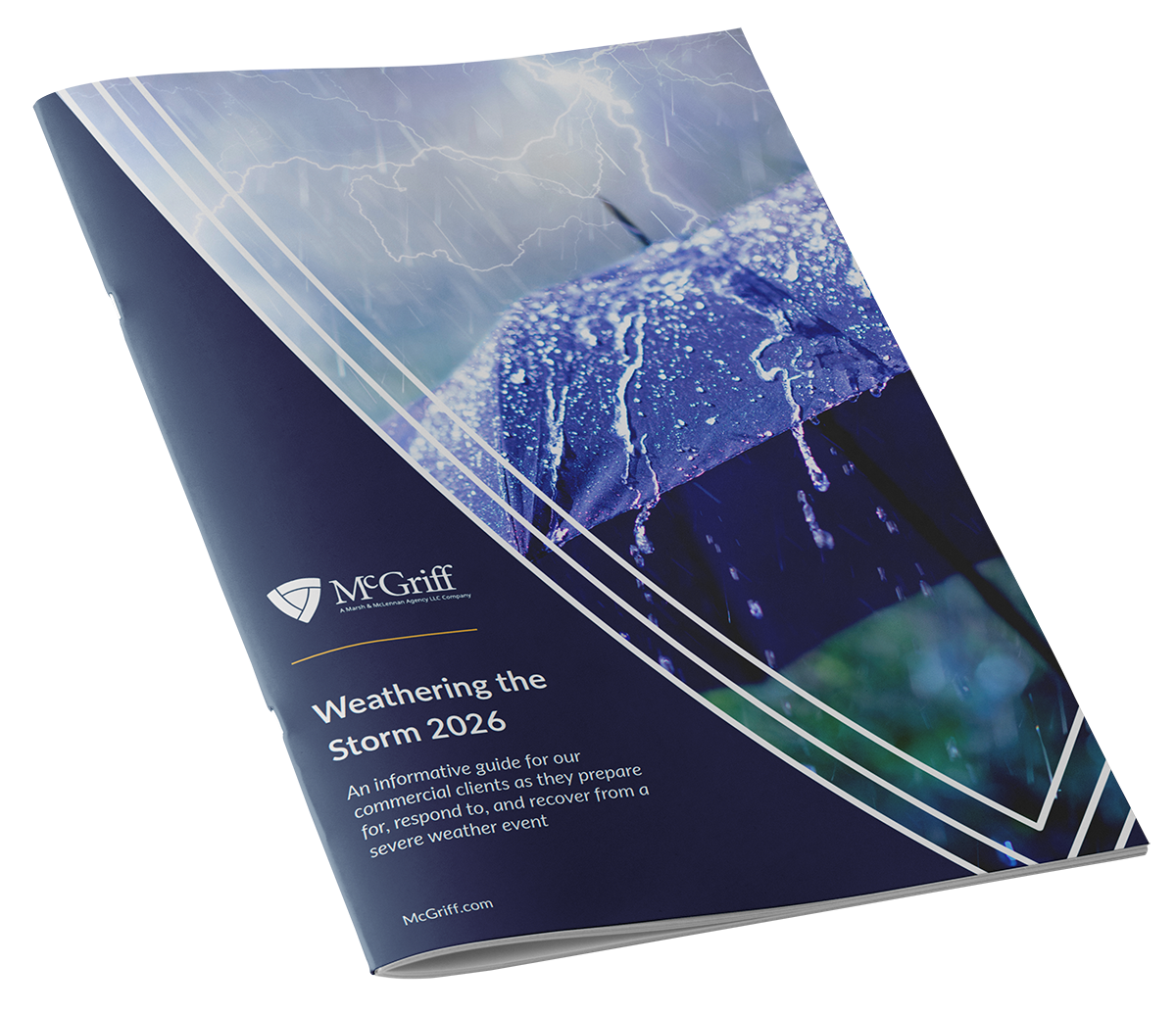
It only takes one significant event — hurricane, tornado, flood, or severe convective outbreak — to cause major impacts. Our Weathering the Storm 2026 guide (PDF) has been designed to help individuals, businesses, and communities prepare for, respond to, and recover from severe weather events – to reduce losses and improve resilience.
Whatever the situation, McGriff is here for you. We appreciate your trust. Please do not hesitate to contact your McGriff service team if you have any questions.